


The Seraphim: Fiery Guardians of the Throne

Updated: Apr 7

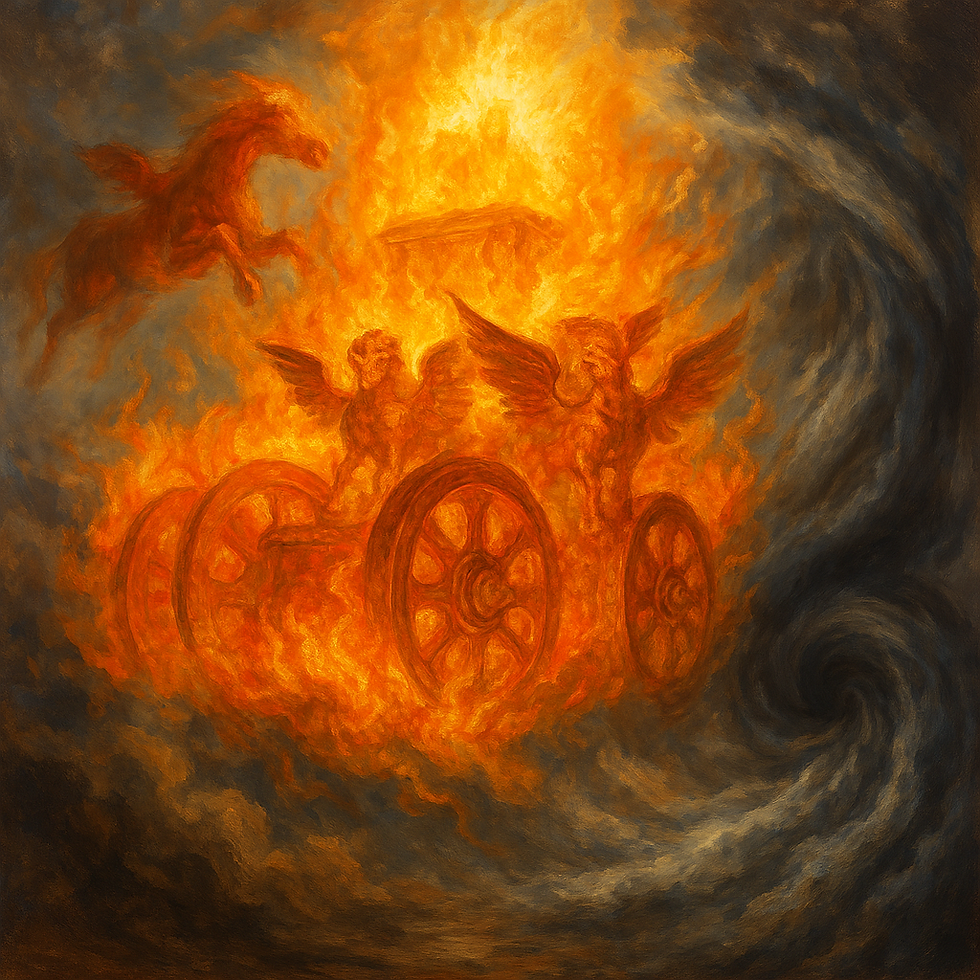
When Scripture opens the veil of heaven, the beings closest to the Throne of the Holy One are the seraphim, fiery, awe‑inspiring guardians whose very nature is a flame. Isaiah, Ezekiel, and John all describe them, though each prophet sees them from a different vantage point. Sometimes they are called seraphim, sometimes cherubim, sometimes simply living creatures, yet their appearance, their function, and their proximity to the Throne reveal that they are the same order of heavenly beings.
The Hebrew word seraphim comes from the root SRF, meaning “to burn,” “to flame,” or “fiery ones.” Fire is their essence and their ministry. Fire is the means by which they guard the holiness of God and cleanse those who are called to draw near.
Isaiah’s vision in Isaiah 6 shows seraphim with six wings, two covering their faces, two covering their feet, and two for flight. They proclaim the holiness of ADONAI‑Tzva’ot, and their voices shake the foundations of the heavenly Temple. The House fills with smoke, the protective cloud of the Shekinah shielding Isaiah from being consumed by the presence of the Holy One.
This detail is profoundly significant. The smoke that filled the heavenly Temple in Isaiah’s vision mirrors the priestly service in the earthly Temple. In Leviticus 16:12–13, the high priest was commanded to take a pan of burning coals from the altar and bring incense into the Most Holy Place so that the cloud of incense would cover the Mercy Seat, protecting him from the overwhelming presence of God. The same divine principle is at work in both realms: no flesh can stand unveiled before the holiness of God without a covering. In the earthly Temple, the incense cloud shielded the priest. In the heavenly Temple, the Shekinah cloud shielded Isaiah. Heaven and earth reflect one another.
When Isaiah confesses that he is a man of unclean lips, one of the seraphim takes a live coal from the altar of incense and touches it to his mouth. His iniquity is removed, and his sin is purged. Fire cleanses. Fire prepares. Fire commissions.
This cleansing by fire is part of the seraphim’s identity and ministry. They are the guardians of sacred space. They stand where no human can stand without being consumed. They enforce the boundaries of holiness. They protect the Throne.
Ezekiel sees these same beings in Ezekiel 1 and Ezekiel 10, though he calls them living creatures and later identifies them explicitly as cherubim. He describes them with four wings instead of six, but this difference is easily explained by perspective. Ezekiel is looking from below and from the side, seeing the wings used for movement and covering the body. Isaiah and John, standing in the heavenly Temple, see the full six‑winged form. Ezekiel notes their straight legs, round calf‑like feet, burnished bronze appearance, and human hands beneath their wings. He describes them as burning coals of fire, torches moving back and forth, lightning flashing from their midst. They move like lightning; sudden, swift, unstoppable.
Ezekiel also records their four faces - man, lion, ox, and eagle - which match the faces John sees in Revelation 4. These correspond to the four banners of Israel’s wilderness encampment (Numbers 2; Genesis 49; Deuteronomy 33). The leaders of the four encampments were each recognized with symbols and they were as follows:
Reuben - image of a man
Dan - image of a serpent but also an eagle
Judah -symbol of a lion
Ephraim - symbol of an ox
The earthly camp was patterned after the heavenly court. The throne of God is surrounded by the same imagery that surrounded the Tabernacle. The earthly sanctuary was a shadow of the heavenly one.
This connection becomes even clearer when we look at the cherubim in Genesis 3:24. After the fall, cherubim are stationed at the east of the Garden of Eden with a flaming sword that turns every way to guard the way to the Tree of Life. The sword is fiery. The guardians are fiery. Their task is to protect sacred space from intrusion. This is the same function Isaiah describes in the heavenly Temple. It is the same function Ezekiel sees around the Throne. The cherubim of Eden and the seraphim of Isaiah are the same order of beings, fiery throne guardians whose very presence enforces the holiness of God.
This is reinforced by the Divine Chariot (Merkavah) in Ezekiel 1 and Ezekiel 10. The beings who carry the Chariot are identified as cherubim, yet they share the same fiery nature, the same faces, the same wings, the same lightning‑like movement, and the same proximity to the Throne as Isaiah’s seraphim. Jewish literature, including Hekhalot Rabbati, 3 Enoch, Merkavah Rabbah, Midrash Rabbah, and Talmud Chagigah 13b–14a, consistently describes these throne guardians as fiery beings who surround the King, bear the Chariot, minister in the heavenly Temple, and guard the Throne of Glory. In these writings, seraphim emphasizes their fiery nature, while cherubim emphasizes their throne‑bearing, guarding role. They are not different species but different titles for the same heavenly order.
This brings us to Revelation 8:3–5, where John sees “another angel” standing at the golden altar before the Throne. He is given incense to mix with the prayers of the saints, and the smoke rises before God. Then this angel takes fire from the altar and casts it to the earth. Though John does not call him a seraph, his location, his role, and his handling of fire all point to the same order of beings Isaiah encountered. The seraphim minister at the altar of incense. They handle the coals. They carry fire. They participate in the cleansing and sanctifying work of God.
The parallel is unmistakable:
In Isaiah 6, a seraph touches the prophet’s lips with a coal from the altar to cleanse him.
In Revelation 8, a seraph‑like being takes fire from the same altar and uses it in God’s purifying work.
In both scenes, fire is not destruction, it is consecration. It is the fire of holiness, and a fire that prepares a vessel or a world to stand before God.
The seraphim reveal the nature of God’s holiness. They show us that holiness is not passive. It is active. It guards. It cleanses. It protects. It purifies. These fiery beings stand as living symbols of the boundary between the Creator and creation, between holiness and commonness, between life and death. They are the guardians of the Throne, the ministers of the altar, the proclaimers of holiness, and the bearers of the fire that cleanses and commissions.
From Eden to Isaiah, from Ezekiel to Revelation, their ministry has remained the same: to guard the presence of the Holy One and to prepare those who are called to draw near.
Their cry still echoes through the ages:
“Holy, holy, holy is ADONAI‑Tzva’ot; the whole earth is filled with His glory.”
Leisa

Comments